
OVERLEESE
Asimina triloba 'Overleese'
About the Variety: Overleese is considered one of the finest pawpaw varieties, selected from a wild tree in Indiana in the 1950s. Named after its discoverer, Overleese represents careful observation of superior wild genetics rather than deliberate breeding. It has become one of the most widely planted named pawpaw varieties for its large fruit size, excellent flavor, and relatively early ripening. Overleese exemplifies the potential of America's largest native fruit.
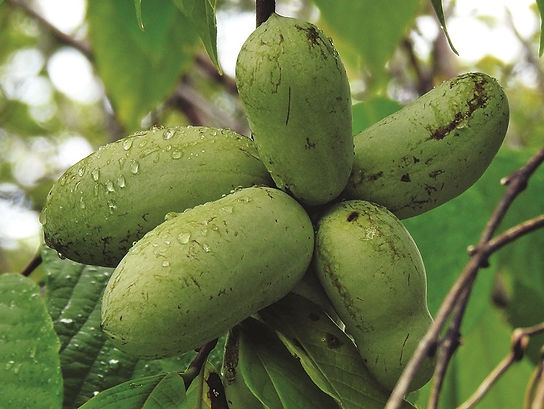
Fruit Description: Very large pawpaw fruits (often 8-12 oz, sometimes larger) with yellow-green skin that turns brown-yellow when fully ripe. Flesh is deep yellow to orange, smooth, custard-like, and intensely flavored. Flavor is tropical and complex - often described as banana-mango-pineapple with hints of vanilla. Seeds are large and numerous (10-14 seeds typical) which some consider a drawback. The custardy texture is the classic pawpaw experience.
Harvest Window for Cincinnati/Southern Ohio: Early to Mid-September (typically September 5-20)
Ripeness Indicators:
-
Fruit softens significantly - should yield to gentle pressure like a ripe avocado
-
Skin color darkens from green to yellowish-brown
-
Critical indicator: Sweet, tropical aroma becomes very strong
-
Fruit may begin to drop naturally when ripe
-
Overripe quickly: Window between perfect and overripe is brief (1-2 days)
-
Can pick slightly underripe and ripen at room temperature
-
When ripe, skin may develop brown patches or wrinkles
Disease Resistance:
-
Excellent - pawpaws have very few pest or disease problems
-
Native species with natural pest resistance
-
Low maintenance requirements
Best Uses:
-
Fresh eating: Outstanding for eating fresh - cut in half and spoon out the custard
-
Freezing: Freezes very well as pulp (remove seeds, freeze in bags or containers)
-
Baking: Excellent for pawpaw bread, muffins, cookies
-
Ice cream/smoothies: Makes exceptional ice cream and smoothies
-
Substitutes for banana: Can replace banana in most recipes
-
Storage: Ripe fruit lasts only 2-3 days; frozen pulp lasts 6+ months
How to Share This Fruit: Overleese's large size and excellent flavor make it perfect for introduction-to-pawpaws events - this is the variety that converts skeptics. Organize "America's forgotten fruit" educational programs in mid-September discussing pawpaw history, ecology, and cultural significance. The tropical flavor profile makes pawpaws perfect for "tropical fruits from Ohio" themed events that surprise people. Consider pawpaw processing workshops teaching people to remove seeds and freeze pulp for winter use - this is critical because fresh pawpaws spoil quickly. Excellent for taste comparison events with other pawpaw varieties to demonstrate diversity within the species. The brief ripeness window means you need urgent harvest messaging - "pawpaws are ripe NOW, come today or miss them!" Because pawpaws are unfamiliar to most people, pair harvest events with recipe demonstrations - pawpaw bread, pawpaw ice cream, pawpaw smoothies to show how to use the fruit. The native status makes pawpaws perfect for ecological education about supporting native species and native pollinators (pawpaws are pollinated by flies and beetles, not bees). Use Overleese's wild Indiana origins to discuss agricultural biodiversity and the value of preserving superior wild genetics.